Clean Your Gutters Before the Rains Hit Half Moon Bay

More than 2,500 homes in this parcel record were built before 1980, and a good portion of those are sitting under original or near-original rooflines with gutters that have had decades to sag, separate, and fill with debris. September is the right month to deal with this, before the first significant rain turns a maintenance task into a repair bill.
Half Moon Bay's homes, from the record
| Built | Homes |
|---|---|
| before 1940 | 253 |
| 1940-1959 | 347 |
| 1960-1979 | 1,946 |
| 1980-1999 | 1,855 |
| 2000 or later | 701 |
| Single-family homes | 4,280 |
|---|---|
| Median lot | 6,710 sq ft |
| On an acre or more | 61 |
| Median size | 1,970 sq ft |
5,102 of 5,942 parcels in this market's record have a known build year.
What you are actually clearing
The coast here means redwood and cypress debris, not just oak leaves. Redwood needles mat down and hold moisture in a way that dry pine needles do not. A gutter that looks open from the ground can be carrying a dense, wet layer of decomposed needle material packed against the downspout opening. Get up there and look.
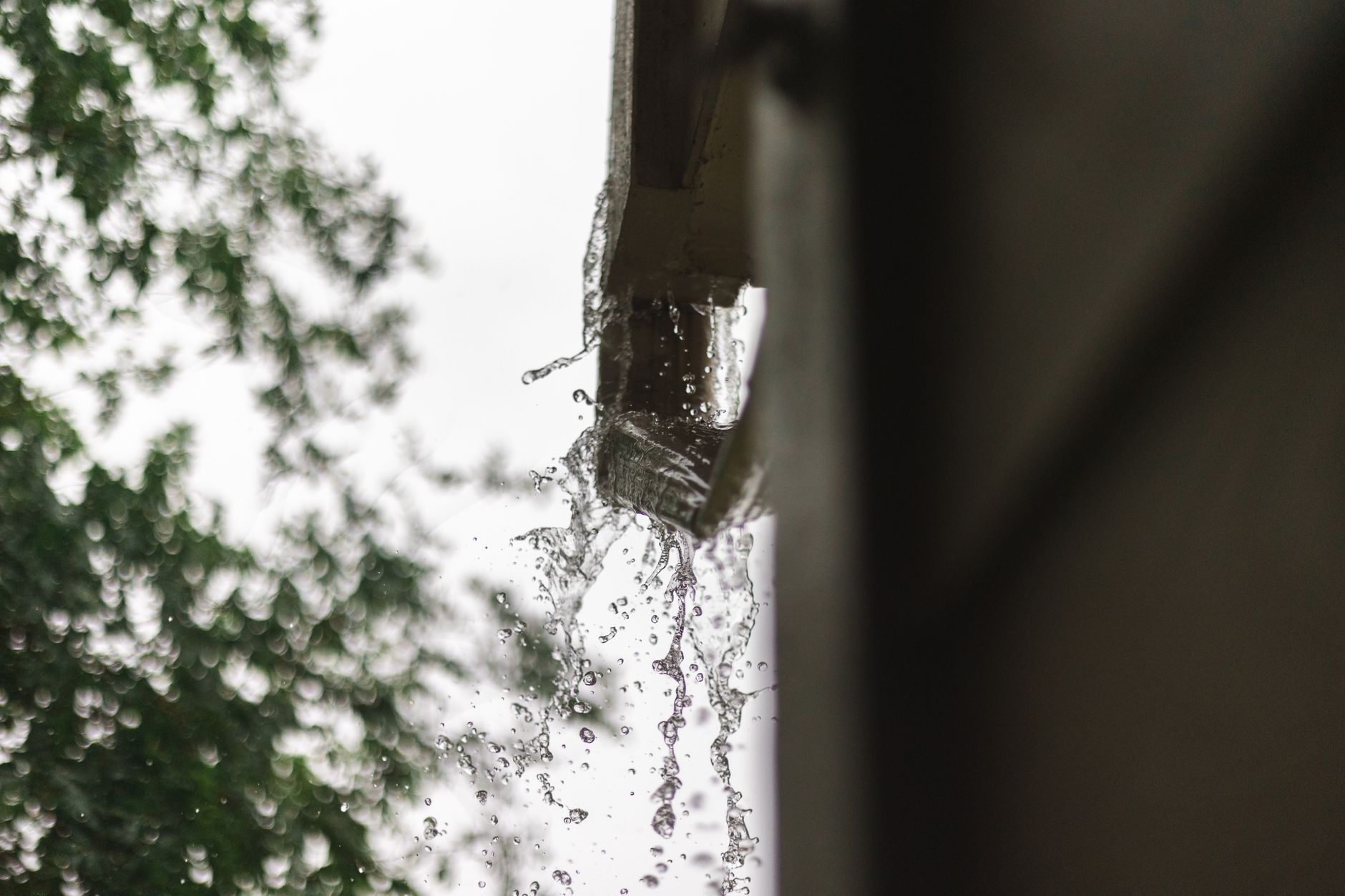
Clear the full gutter run, not just the section above the downspout. Work toward the downspout so you are pushing debris in one direction. Check the downspout opening at the gutter, then flush the downspout from the top with a hose. Water should run freely out the bottom. If it backs up, the downspout is blocked and flushing alone will not fix it — you need to clear the obstruction before rain does it for you in the worst way.
What to look at while you are up there
The ladder is already out. Take an extra ten minutes.
- Gutter pitch. Water should drain toward the downspout, not pool in the middle. A gutter that has pulled away from the fascia or sagged at a bracket will hold standing water all winter.
- Fasteners and hangers. Wood fascia boards on older Half Moon Bay homes absorb years of coastal moisture. A hanger that feels solid when you tap it in July may be pulling out of punky wood by November. Press on the gutter near each hanger. Movement means the fastener needs attention.
- Seams and end caps. The salt air here accelerates joint sealant breakdown. Run your eye along every seam for rust staining or old sealant that has cracked and separated.
- Roof edge. While you have the sight line, look at the first course of shingles and the flashing where the roof meets any walls or chimneys. Lifted shingles or flashing that has pulled away from the wall are problems the rain will find immediately.
- Soffit condition. Look at the underside of the overhang near the gutter. Soft spots, staining, or paint that is peeling from below are signs that water has already been getting behind the gutter at some point.
If you find something that goes beyond what a ladder and a caulk tube can handle, that conversation belongs with a licensed contractor and, depending on the scope, potentially the City of Half Moon Bay building department.
Where the water should end up
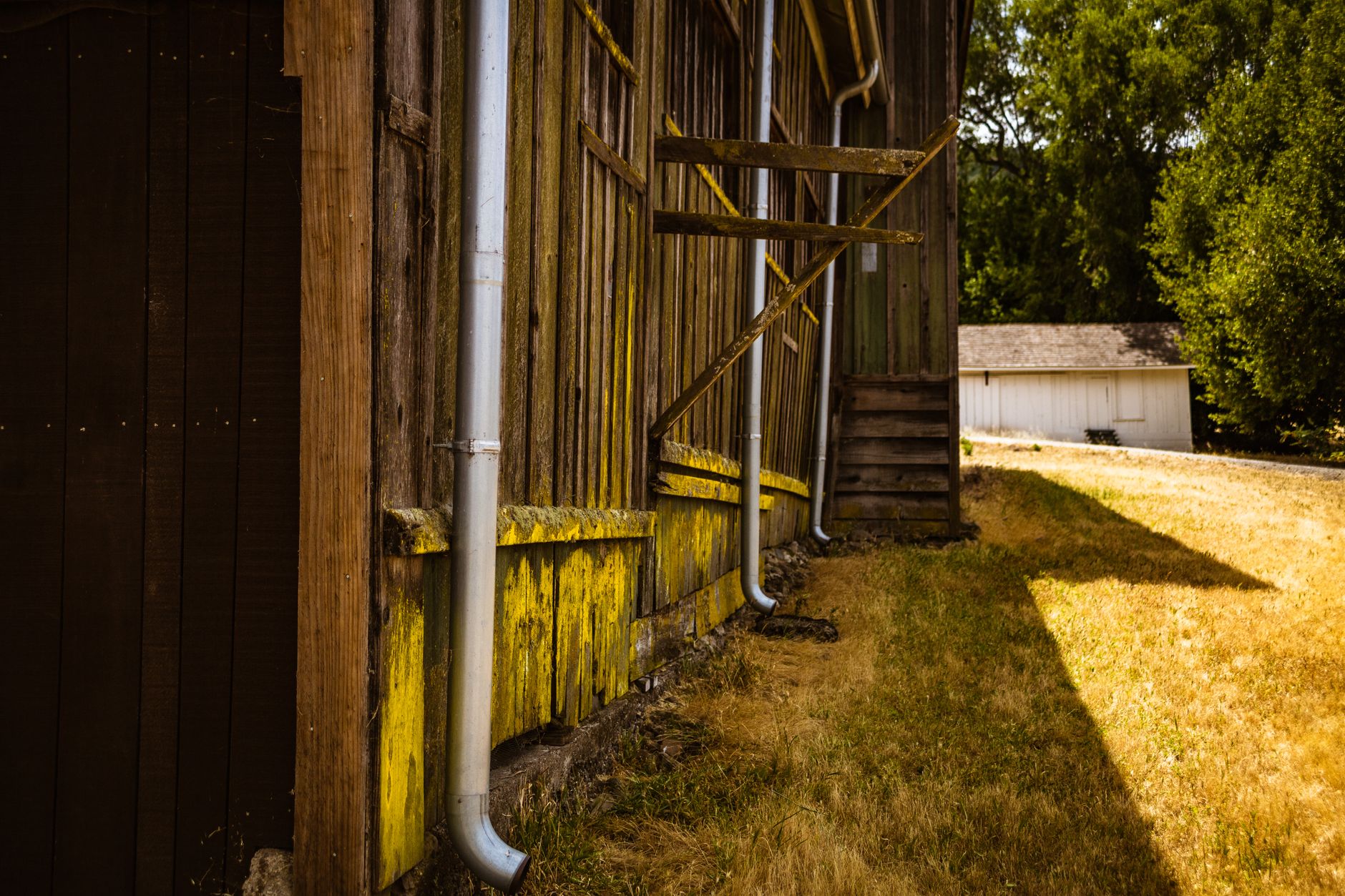
This is the part owners skip, and it matters here. The coastal topography around Half Moon Bay means lots sit close together with grades that do not always shed water cleanly away from foundations. A downspout that terminates six inches from the house and dumps onto flat soil is doing almost nothing useful.
Downspout water should travel away from the foundation. Extensions or splash blocks that direct flow at least several feet from the house wall are the starting point. If the grade around your house slopes back toward the foundation — common on older lots where soil has settled — the splash block is not enough. A buried extension that carries water to a legal discharge point is worth discussing with a contractor.
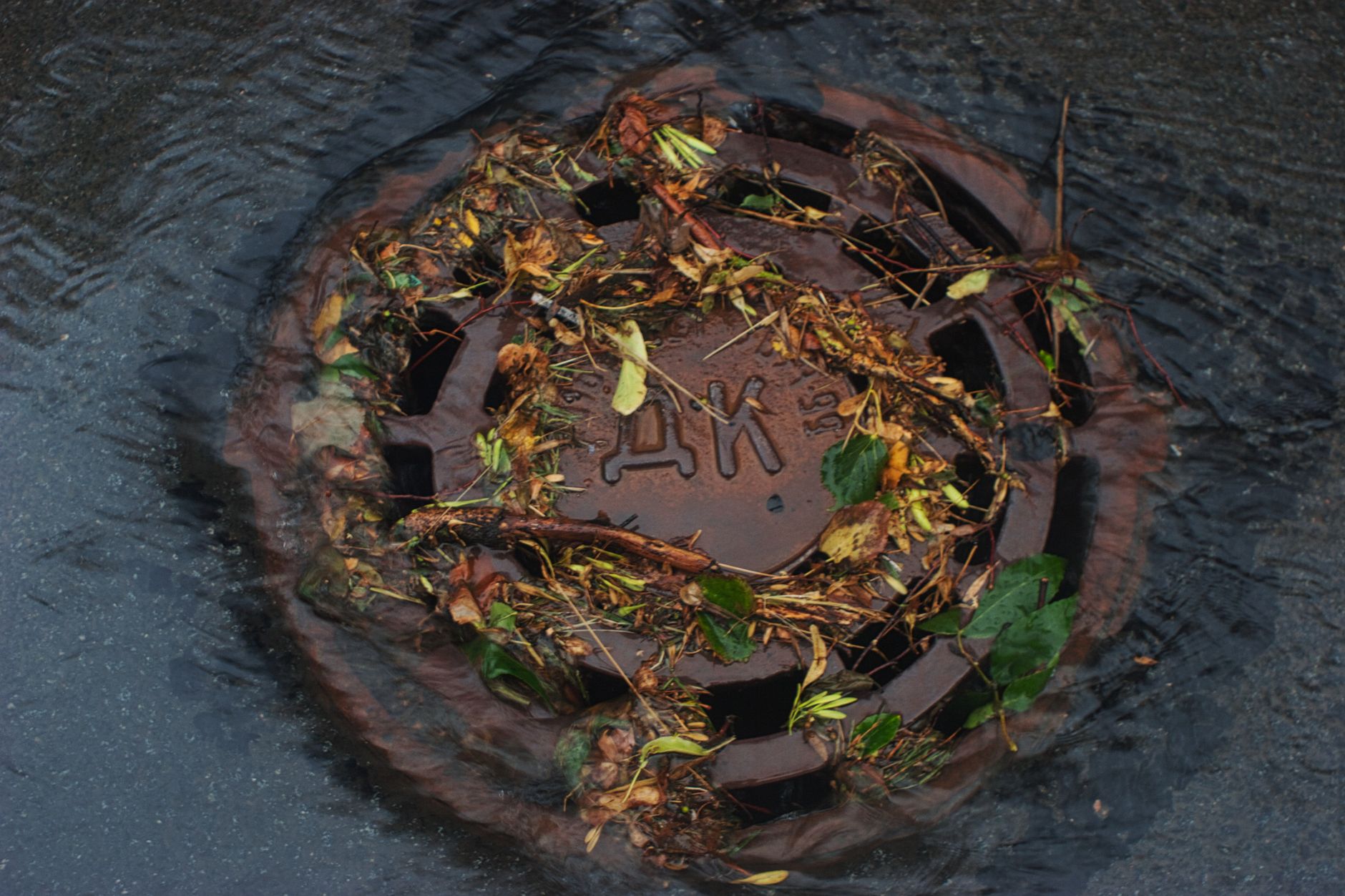
Do not discharge downspout water into the sanitary sewer. In California, that connection is not permitted. Where the water goes legally depends on your lot — a drywell, a rain garden, the street gutter if local drainage allows it — and any question about what is permitted on your specific parcel should go to the City of Half Moon Bay's public works or building department.
One last thing about mobile homes
The parcel record here includes 292 mobile home parcels. Roof and gutter systems on manufactured housing vary significantly from standard stick-frame construction. The same principles apply — clear the gutters, check the pitch, watch where the water goes — but the details of how gutters are fastened and how the roof edge is configured differ enough that it is worth being careful about what you are looking at before you start pulling on things.
Where to check
No official sources were used in this article. For questions about drainage connections or what is permitted on your parcel, contact the City of Half Moon Bay directly.
Tim McMullen · CA DRE #02016832
[email protected] · (415) 691-9272
More from Half Moon Bay

What Your Half Moon Bay Home Is Missing, Based on When It Was Built
More than 2,500 homes in this market were built before 1980, when insulation standards were thin and single-pane glass was the default. Here is what to expect by era, and a practical order for fixing it.

What a Fall Roof Check Actually Looks For in Half Moon Bay
More than half the homes in this market's parcel record were built before 1980. That means a lot of roofs with four-plus decades of coastal weather behind them—and fall is the right time to look.
What Half Moon Bay's ADU Rules Actually Allow — and Where State Law Overrides the City
Half Moon Bay has more than 4,200 single-family lots with a median size of 6,710 square feet — enough room for a backyard ADU on most of them. Here is what the rules allow, where the city's own ordinance ran into state compliance problems, and what that means if you are planning to build one.